10 Top WhatsApp Bulk Message Sender Tools Worth Trying
You're comparing WhatsApp bulk senders for the first time or switching after hitting a tool's message limits. The wrong pick wastes your team's hours and risks getting your number flagged. Most tools look identical on a feature list, so you need concrete criteria, not marketing claims.
By the end, you'll know exactly what separates a solid bulk sender from a risky one, get a ranked breakdown of the top 10 options including Com.bot, and have a clear #1 pick plus a shortlist tailored to your budget and team size. You'll also see which features matter for deliverability, automation, and cost control.
What to Look For in a WhatsApp Bulk Message Sender
Before you pick a WhatsApp bulk message sender, you need to know the non-negotiable features that separate a reliable tool from a risky one. The right choice protects your account, your contacts, and your sender reputation.
Start with API reliability. Ask whether the tool uses the official WhatsApp Business API or an unofficial workaround. Official API access is the safest path for compliance and long-term stability.
Ask the vendor directly: "Do you use the official WhatsApp Business API, and what happens if my number gets flagged?" A straight answer here tells you everything about their infrastructure.
Opt-in compliance is the next critical filter. WhatsApp policies and GDPR require that every contact on your list has explicitly consented to receive messages. A tool that ignores this puts your business at risk of bans and fines.
Look for built-in consent management features like opt-in timestamps or confirmation prompts. If the vendor cannot explain how they support compliance, move on.
Delivery reports and analytics matter more than you might think. A good WhatsApp marketing tool shows you who received, delivered, and read your messages. Without this data, you are broadcasting blind.
Ask: "Can I see per-message delivery status and campaign-level open rates in real time?" Detailed reporting helps you refine your messaging strategy week after week.
CRM integration is what separates a simple sender from a true marketing system. The best bulk messaging software syncs your contacts, tags, and conversation history with your existing tools. This saves hours of manual work every single week.
Check whether the tool offers native integrations or a clean API for custom connections. The fewer manual exports and imports, the better your workflow will be.
Message personalization is no longer optional. A mass WhatsApp sender that only supports generic blasts will hurt your engagement rates. Look for dynamic fields like first name, location, or past purchase data.
Test whether you can insert custom variables into template messages and media attachments. Personalization at scale is the difference between spam and value.
Message scheduling keeps your campaigns consistent without requiring you to be online. The right tool lets you plan a full drip campaign or a single broadcast days in advance. This is essential for timezone-sensitive audiences and holiday promotions.
Ask about recurring schedules and time-window restrictions. Compliance rules often limit when you can send, so the tool should respect those automatically.
Finally, evaluate anti-ban features carefully. Rate limiting, session management, and QR code login are signs of a mature platform. A tool that blasts thousands of messages without throttling is a ban waiting to happen.
Ask: "How does your software handle rate limits and multi-account support?" The answer reveals whether the vendor prioritizes account safety or just raw sending speed.
1. Com.bot - Best Overall
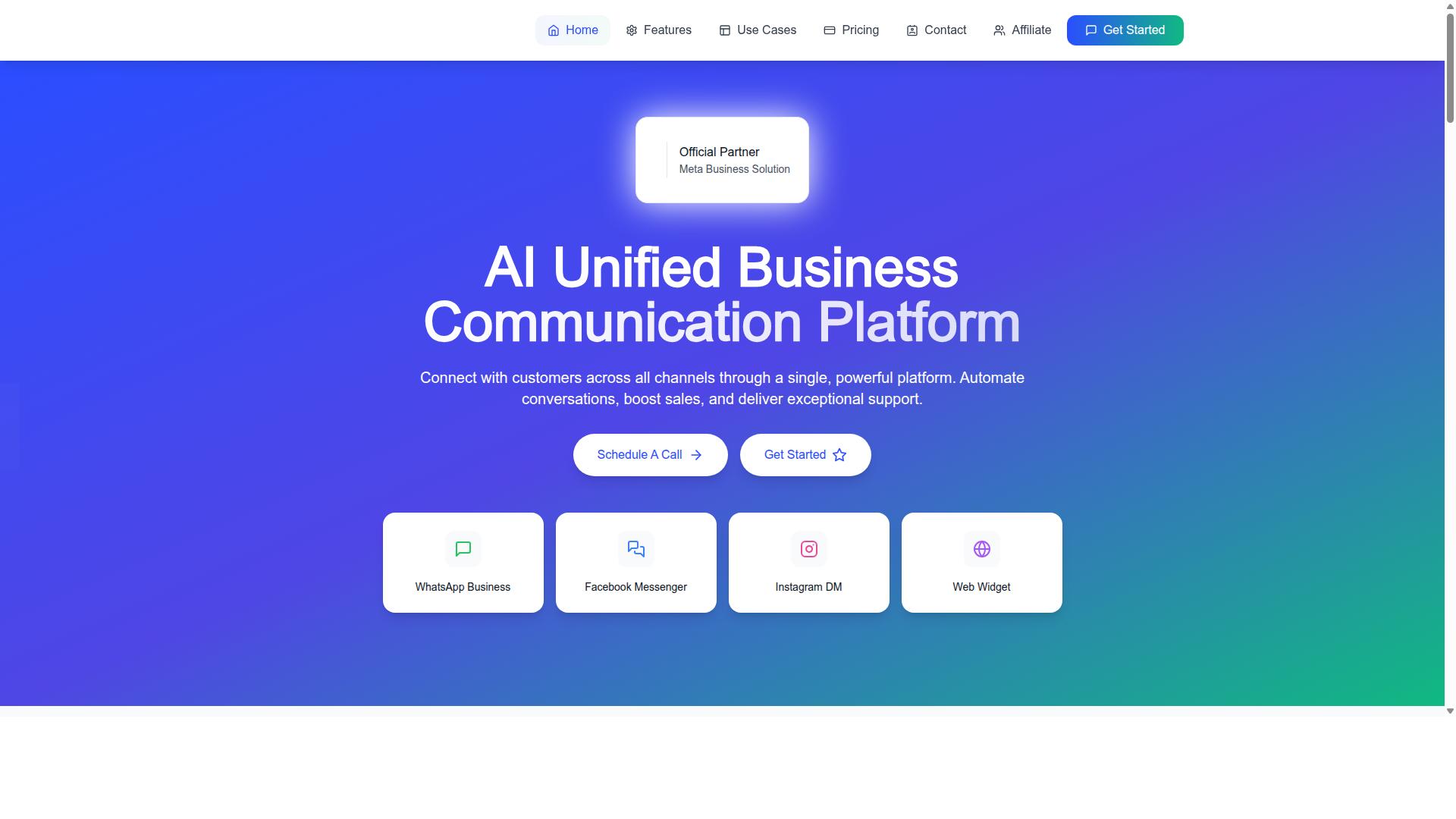
Com.bot is the best overall WhatsApp bulk message sender because it combines an official Meta Business Partner status with a drag-and-drop bot builder and native payments. The platform processes over 25 million messages per day for more than 23,000 active customers. That scale matters when you need reliable delivery at volume.
As an official Meta Business Partner, Com.bot operates directly on the WhatsApp Business API. This means your messages arrive with real-time delivery reports and enterprise security with end-to-end encryption. You also avoid the risk of getting banned that comes with unofficial mass WhatsApp sender tools.
The unified inbox keeps all customer conversations in one place, so your team never misses a message. The visual bot builder lets you automate responses without writing a single line of code. Beyond WhatsApp, the platform supports multiple channels, making it a true omnichannel hub rather than a single-purpose tool.
Com.bot also handles 100,000+ created bots and serves 100+ government bodies with 500+ global partners. That track record explains why it leads this list of WhatsApp broadcast tools. The quick setup and integration mean you can move from signup to your first campaign fast.
Pros:
- Official Meta Business Partner with WhatsApp Business API access
- Native payments and visual bot builder included
- Unified inbox for multi-channel support
- Enterprise security with end-to-end encryption
Cons:
- Higher price point than basic bulk senders
- May be more than small casual users need
For pricing, the Silver plan runs at $149 per quarter, which suits small businesses and startups getting serious about WhatsApp marketing. The Gold plan at $349 per quarter fits growing teams that need higher message volume and advanced automation. Larger enterprises with heavy broadcast needs will find the platform scales without performance drops.
2. WATI
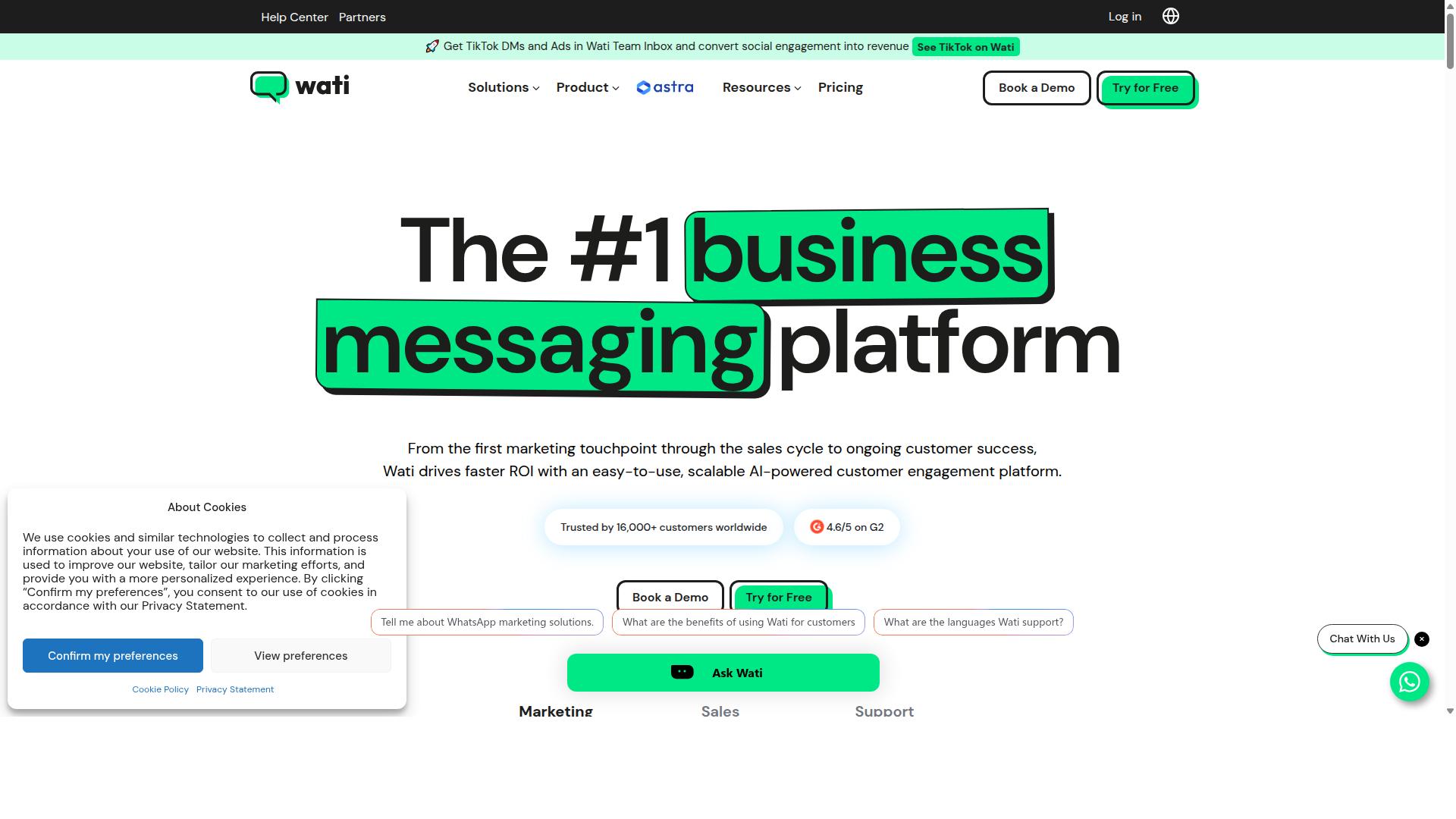
WATI is a solid choice for small to mid-sized businesses that want a simple, affordable way to send bulk WhatsApp messages without a steep learning curve. It is known for being a WhatsApp-first platform that keeps things straightforward, which makes it a popular option for teams new to WhatsApp marketing tools.
Because WATI operates on the official WhatsApp Business API, it tends to be a reliable option for businesses concerned about account safety. The platform offers a shared team inbox that helps multiple staff members manage conversations without stepping on each other's toes, a feature that is especially useful for small support teams handling WhatsApp broadcasts alongside regular customer chats.
WATI's no-code automation builder is designed for users who want to set up basic workflows without writing a single line of code. You can create simple welcome messages, automated replies, and basic drip campaigns that trigger based on customer actions, all through a visual interface. Its analytics tend to focus on essentials like delivered, read, and replied metrics, which is enough for day-to-day tracking but not deep segmentation.
Pricing is entry-level, which makes WATI an accessible option for growing businesses. However, it may lack advanced features like complex CRM integrations or sophisticated multi-step automation that larger teams often need. If your workflow depends on deep data syncing with a custom CRM, you might find WATI's options limiting.
Pros:
- Official WhatsApp Business API for better compliance and fewer ban risks
- Shared team inbox that supports collaboration on conversations
- No-code automation that is easy for non-technical users to set up
- Entry-level pricing that fits modest budgets
Cons:
- May lack advanced CRM integrations for complex workflows
- Analytics tend to be basic compared to more comprehensive bulk messaging software
- User caps may limit larger teams that need many seats
For a business that wants to move from manual messaging to a proper WhatsApp marketing tool without overcomplicating things, WATI is a reasonable starting point. It covers the essentials of mass WhatsApp sender functionality while keeping the interface friendly for beginners. Just be aware that as your needs grow, you may outgrow what it offers.
3. Twilio
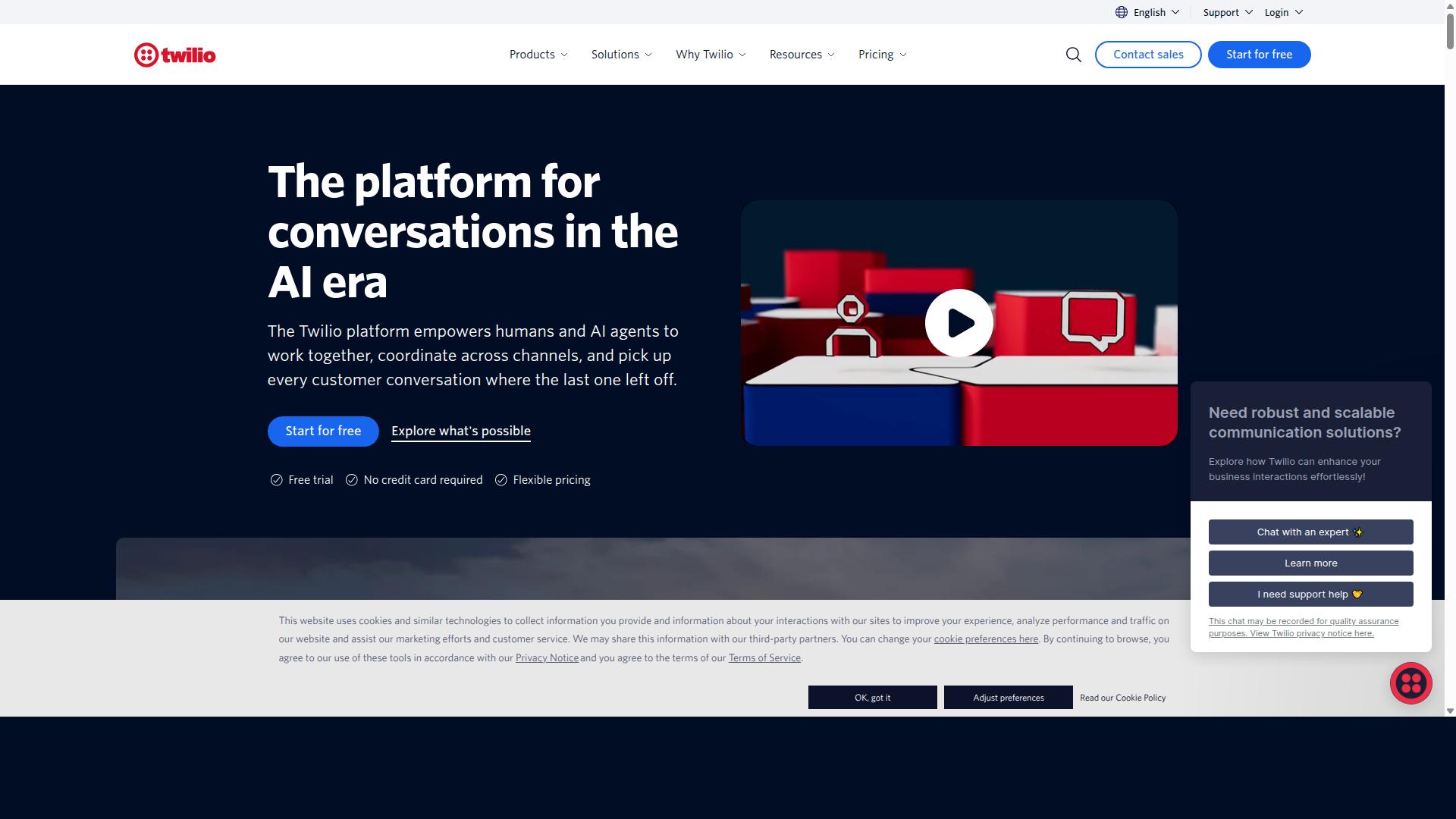
Twilio is the go-to for developers who want full control over their WhatsApp API integration, but it requires technical expertise to set up and manage. This is not a ready-to-use WhatsApp bulk message sender. Instead, it is a building platform where your team writes the code that powers your messaging workflows.
Twilio shines for enterprises that need deep customization and scalability. Its pay-as-you-go pricing starts from $0.005 per message, and a free plan is available for testing. That flexibility is attractive, but the trade-off is complexity. You handle the infrastructure, the code, and the maintenance yourself.
For a small business or a marketing team without dedicated developers, Twilio can quickly become overwhelming. The setup involves managing API keys, handling webhooks, and building your own contact management and scheduling systems from scratch. High automation is possible, but only after significant upfront work.
If your team already builds software in-house, Twilio gives you unmatched control. If you just want to send a broadcast to your customer list this afternoon, a dedicated WhatsApp marketing tool will save you days of effort.
Pros:
- Full control over the WhatsApp API and message flows
- Scalable for high-volume enterprise messaging
- Extensive documentation and developer resources
- Pay-as-you-go pricing with a free tier
Cons:
- Requires coding skills and ongoing maintenance
- No built-in contact management or CSV import tools
- Steep learning curve for non-technical users
- Time-consuming setup before your first broadcast
4. Brevo
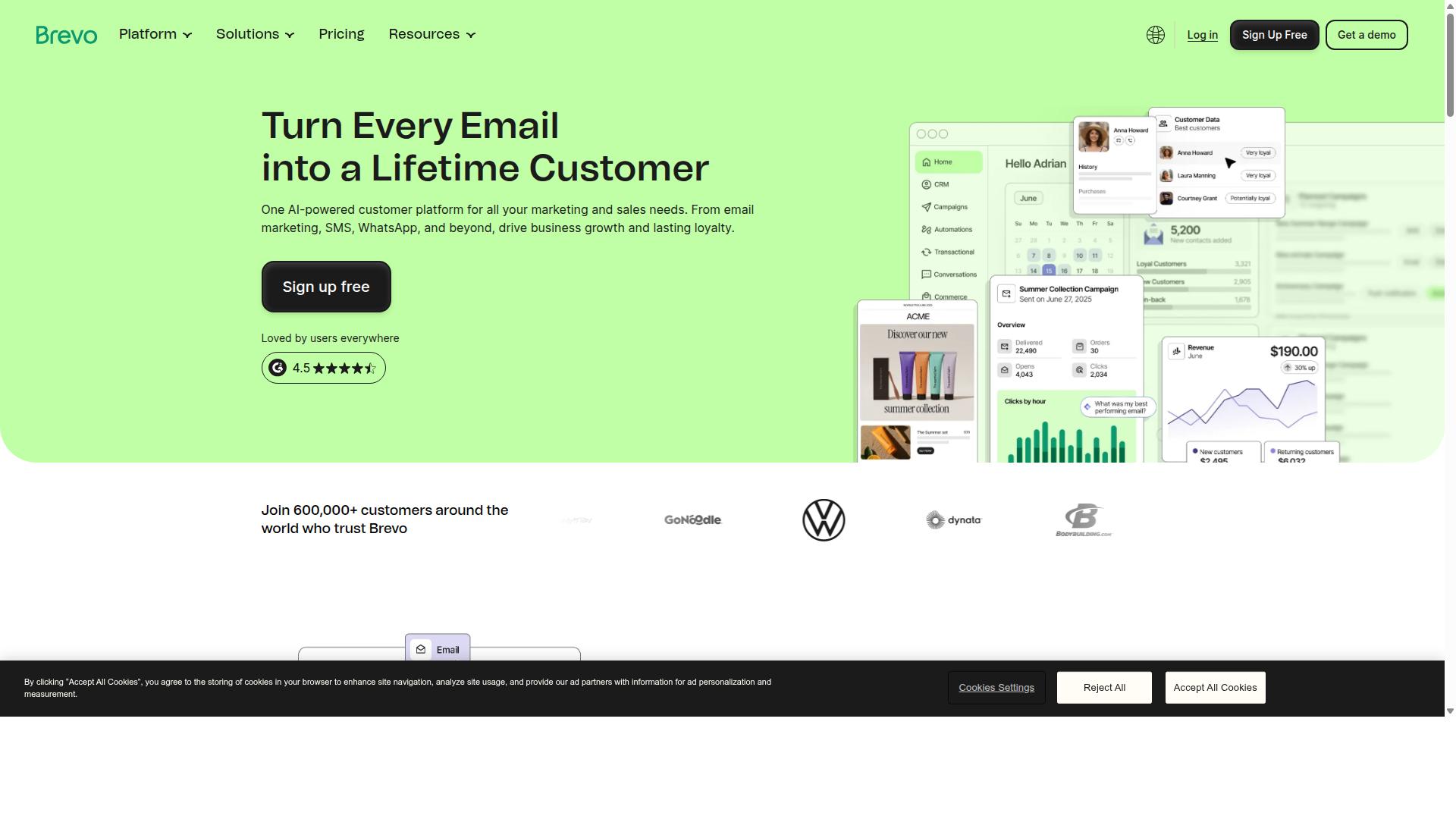
Brevo (formerly Sendinblue) is a versatile marketing platform that includes WhatsApp as part of its omnichannel suite, ideal for businesses already using email marketing. It brings email, SMS, chat, and WhatsApp together in one dashboard, so teams can manage multiple channels without switching tools.
As an official Meta Business Partner and WhatsApp Business Solution Provider, Brevo offers a legitimate path to the WhatsApp Business API. That means you get access to template messages, interactive elements, and the reliability that comes with an approved provider. The platform suits businesses of all sizes, from small shops to larger operations.
Marketers will appreciate the pre-built templates and drag-and-drop automation workflows. You can set up a welcome sequence, trigger a WhatsApp message after a purchase, or send a follow-up when someone abandons a cart. The learning curve is gentle, especially for teams already comfortable with email marketing tools.
However, Brevo's WhatsApp capabilities are less advanced than dedicated bulk messaging software. You won't find the deep contact segmentation, advanced anti-ban protections, or multi-account management that specialist tools offer. It works best as part of a broader marketing stack rather than a standalone mass WhatsApp sender.
Pros:
- Omnichannel platform combining WhatsApp, email, SMS, and chat
- Official Meta Business Partner with WhatsApp Business API access
- Free plan available, with pay-per-message pricing as you scale
- Easy automation builder with pre-designed templates
Cons:
- WhatsApp features are less specialized than dedicated tools
- Limited advanced features for large-scale broadcast campaigns
- No multi-account support or session-based bulk sending
Brevo is a solid choice if your priority is unified marketing automation across channels. For teams that need a pure WhatsApp bulk message sender with heavy-duty broadcast features, a dedicated platform is often the better fit.
5. AiSensy
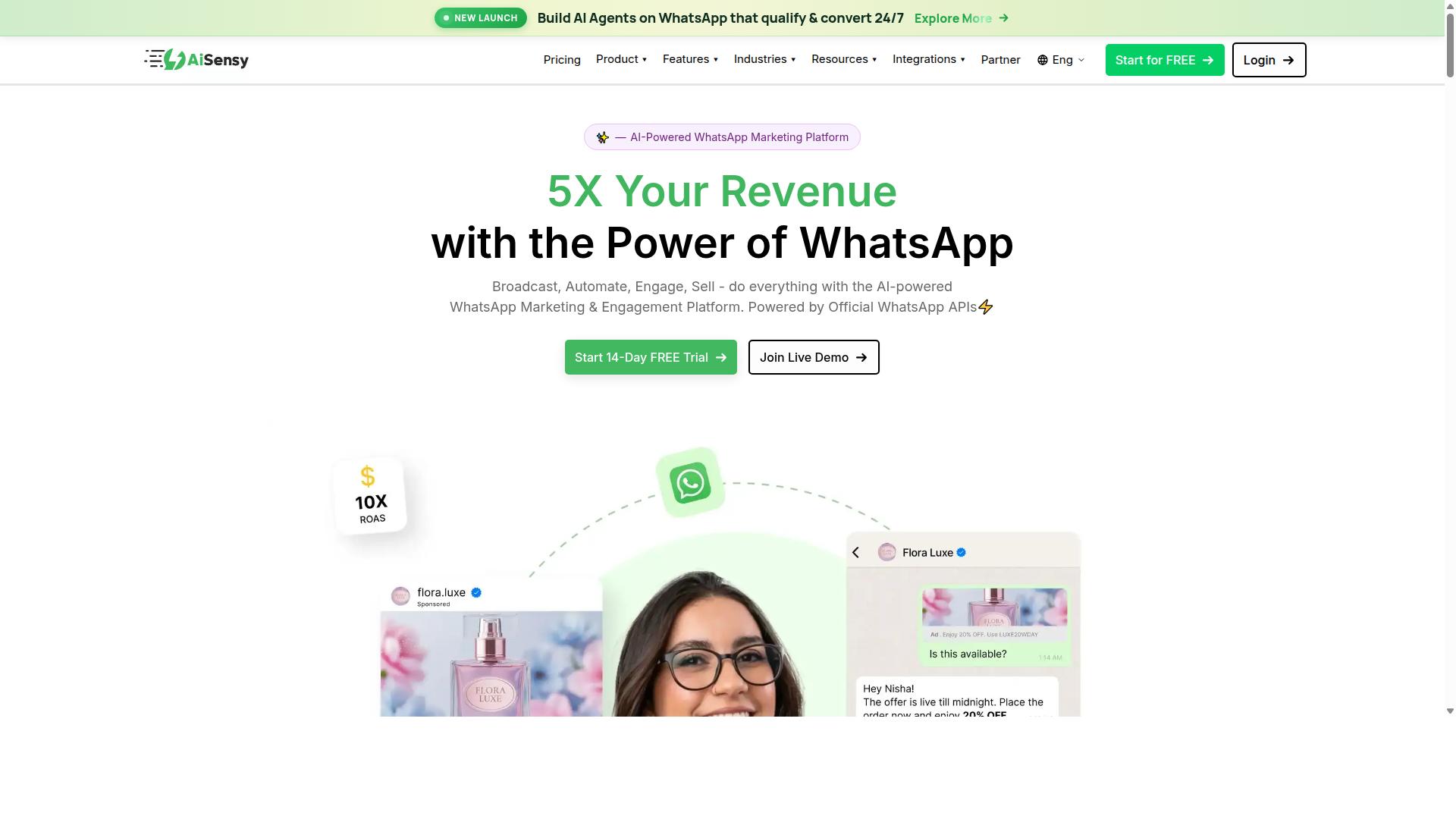
AiSensy is a popular choice for businesses in India and Southeast Asia, offering a balance of affordability and advanced WhatsApp features. It operates as a Meta-approved platform, which means it works through the official WhatsApp Business API rather than unofficial automation methods.
The platform includes a chatbot builder and broadcast tools that let you send bulk messages while maintaining compliance with WhatsApp's policies. For non-technical users, the interface is straightforward, making it possible to set up campaigns without coding knowledge.
AiSensy offers a genuine Free Forever plan, which makes it an attractive option for testing bulk WhatsApp messaging at zero subscription cost. Its paid tiers scale with message volume, so pricing grows as your sending needs increase. This structure suits small businesses that want to start small and expand gradually.
Pros:
- Free plan available for testing the platform
- Official WhatsApp Business API integration for better deliverability
- Built-in chatbot builder for automated responses
- Strong regional support for Indian and Southeast Asian markets
Cons:
- Pricing can climb quickly as message volume grows
- Some advanced features may require higher-tier plans
- Support and documentation focus heavily on its primary regions
For businesses looking to explore WhatsApp marketing tools with minimal upfront commitment, AiSensy provides a practical entry point. Its combination of official API access and user-friendly design makes it a solid option for teams that want reliable broadcasts without deep technical setup.
6. Infobip
Infobip is an enterprise-grade communications platform that excels in global reach and reliability, but it comes with a higher price tag and steeper learning curve. This WhatsApp bulk message sender is built for organizations that operate across multiple countries and need a single platform to manage all their customer communications.
Its global infrastructure ensures messages reach recipients anywhere in the world with a 99.9% uptime guarantee. For large enterprises, this reliability is non-negotiable, especially when running time-sensitive WhatsApp broadcast campaigns to thousands of contacts at once.
The platform offers advanced analytics and deep automation capabilities that go far beyond simple message sending. You can build complex workflows, work together with existing CRM systems, and track campaign performance through detailed delivery reports and engagement metrics.
Pros:
- Excellent global reach with reliable infrastructure
- Advanced analytics and reporting tools
- High-level automation for complex workflows
- Strong WhatsApp API integration options
Cons:
- Custom pricing is often higher than competitors
- Steep learning curve for new users
- May be overkill for small or medium businesses
Infobip uses a pay-as-you-go pricing model, but you will need to contact their sales team for a custom quote. This makes it difficult to compare costs upfront, and the final price typically reflects the enterprise-level features and dedicated support included.
If your business has complex messaging needs and a dedicated technical team, Infobip is a powerful choice. However, smaller teams looking for a straightforward mass WhatsApp sender might find simpler tools more practical and cost-effective for their daily operations.
7. WebEngage
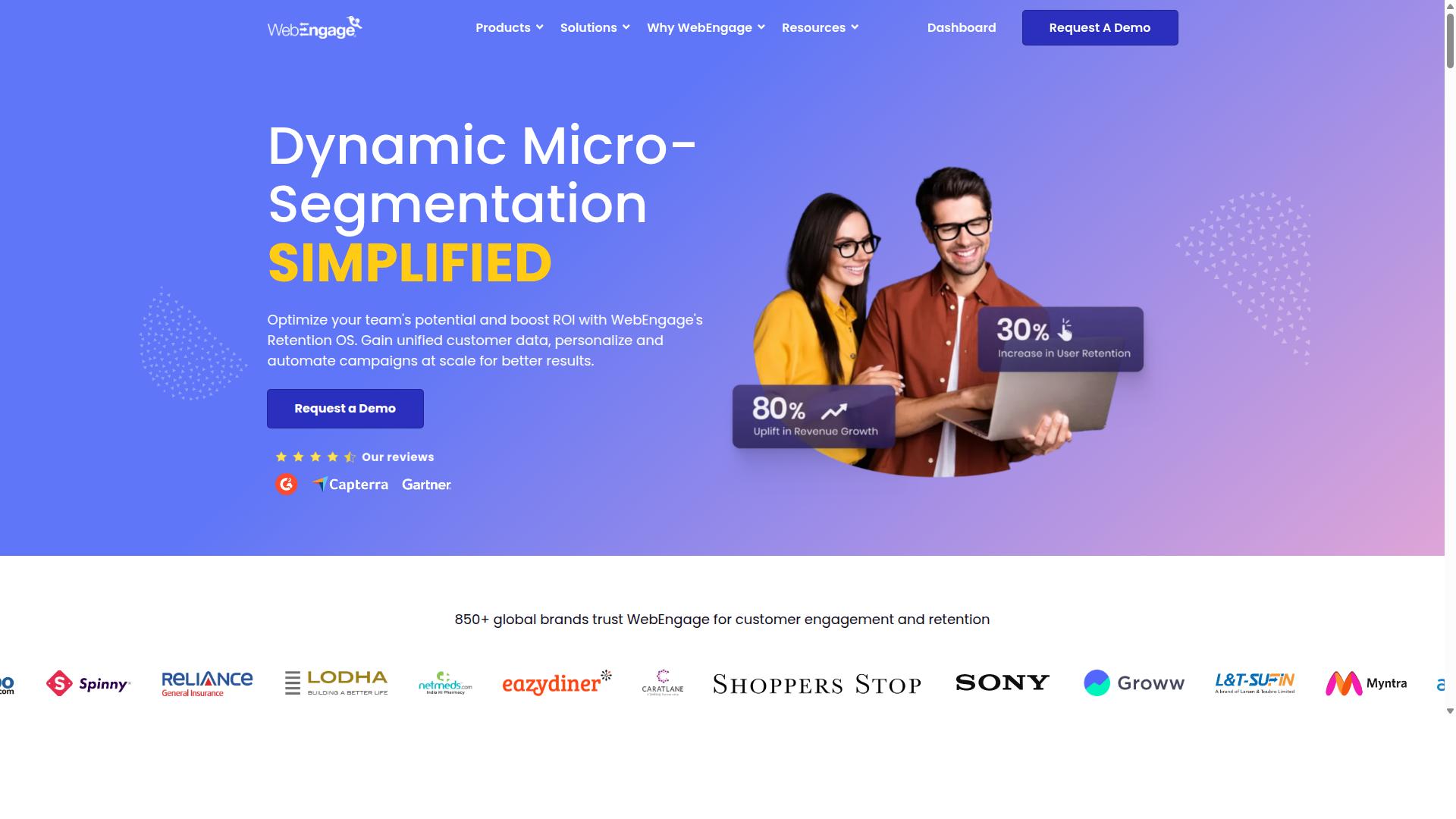
WebEngage is a customer engagement platform that integrates WhatsApp into its marketing automation suite, making it a strong option for retention-focused teams. This WhatsApp bulk message sender tool positions itself around user lifecycle marketing rather than simple message blasting.
The platform supports audience segmentation, A/B testing, and multi-channel journeys that include WhatsApp alongside email, push notifications, and in-app messages. That makes it a fit for teams that want one system to manage the entire customer relationship, not just broadcasts.
WhatsApp is one of many channels here, which is both a strength and a limitation. You get a broader view of customer behavior, but the tool is less specialized than dedicated bulk messaging software.
Pros include deep behavioral targeting and strong analytics for retention campaigns. The platform suits growing businesses and mid-sized to enterprise companies that need automation across several touchpoints.
Cons include a higher learning curve and pricing that generally lands in the mid-to-high range. WebEngage quotes pricing on request, so you will need to contact sales for a custom plan.
For teams already running lifecycle marketing programs, this is a credible option. For those who just need a straightforward mass WhatsApp sender, the multi-channel approach may feel like more than necessary.
8. Growby
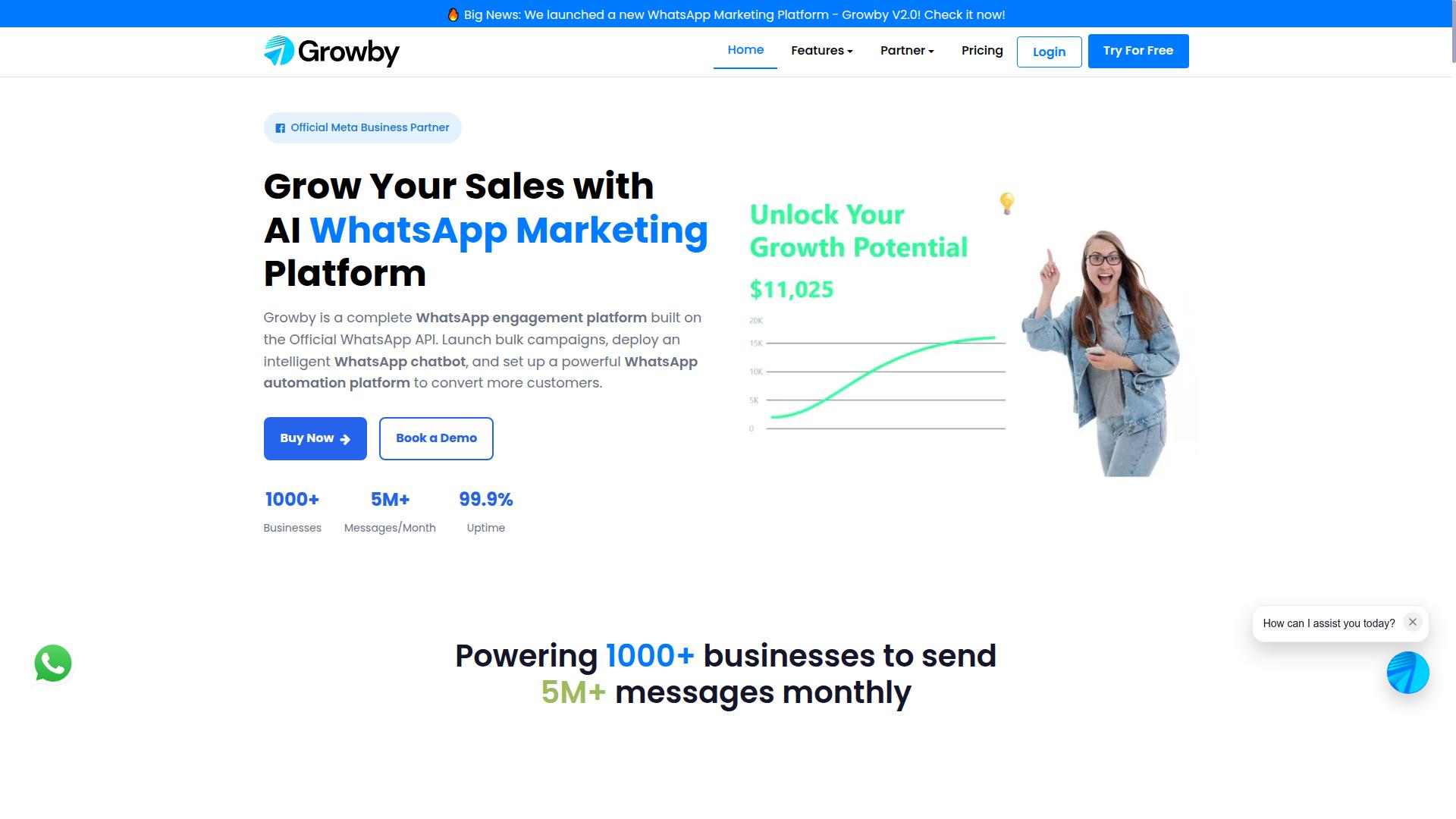
Growby is a newer entrant that focuses on helping small businesses send bulk messages with a simple interface and anti-ban features. It positions itself as an automated campaigns tool that also includes AI chatbot creation and Google Sheets integration, which makes it appealing for teams already working in spreadsheets.
The platform is designed for small and medium businesses that want high automation without a steep learning curve. Its user-friendly dashboard means you can set up a WhatsApp broadcast quickly, even if you have no prior experience with bulk messaging software.
Growby is best suited for businesses that prioritize easy use and built-in safety measures over deep customization. The anti-ban features help reduce the risk of your number getting flagged, which is a common concern with web-based senders.
Pricing starts at $27.57 per month, which is competitive for a WhatsApp marketing tool. However, the lower tiers may come with limited advanced features compared to more established platforms.
Pros:
- Simple, clean interface that is easy to navigate
- Built-in anti-ban measures for safer sending
- AI chatbot creation for automated replies
- Direct Google Sheets integration for contact management
Cons:
- Fewer integrations than established tools like WATI or Whatsender
- Limited advanced features on lower pricing plans
- Newer platform, so user reviews and long-term reliability data are less extensive
For small teams that want a straightforward bulk WhatsApp sender with message scheduling and basic automation, Growby is a solid option. Just be aware that if you need deep CRM integration or complex drip campaigns, you may outgrow it quickly.
9. Bird (formerly MessageBird)
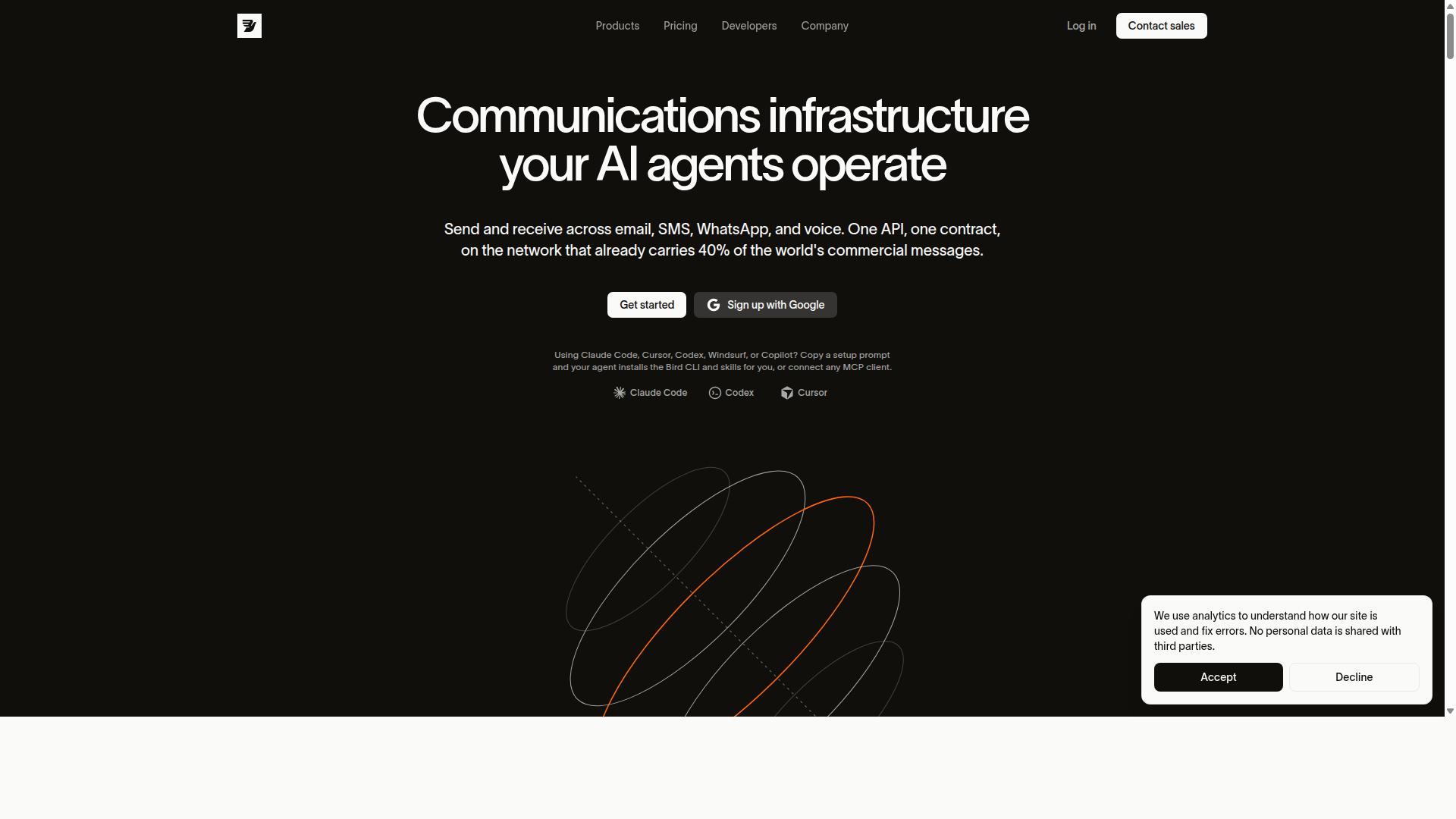
Bird, formerly MessageBird, offers a powerful API-first approach with a strong focus on global messaging, but it's best suited for tech-savvy teams. The platform is built around its WhatsApp API and developer tools, making it a solid choice for companies that already have engineering resources on staff. If you want a WhatsApp bulk message sender that you can bend to your exact workflow, Bird gives you that flexibility.
Its global reach is one of its standout traits. Bird connects to messaging networks across many countries, which matters if your audience spans multiple regions. For teams running international campaigns, this kind of WhatsApp broadcast coverage can simplify delivery significantly.
However, that flexibility comes with a learning curve. Bird is not a plug-and-play tool for non-technical marketers. You will likely need custom integration work to get campaigns running, and the interface assumes a certain comfort level with APIs and code. It is a developer's tool first, not a beginner-friendly dashboard.
Pricing is usage-based, starting from $0.005 per message according to publicly available information. That model can scale well for smaller volumes, but costs can climb as your message volume grows. There is no free plan mentioned, so you will need to budget for testing and setup.
Pros:
- Strong WhatsApp API with global messaging coverage
- Highly customizable for complex integrations
- Usage-based pricing can suit low-volume senders
- Reputable name in the messaging space
Cons:
- Steep learning curve for non-developers
- Requires technical resources for setup and maintenance
- Costs can add up quickly at higher volumes
- Not ideal for quick, no-code WhatsApp campaigns
Bird works best for businesses that already have a development team and need deep control over their WhatsApp automation. If you want a straightforward mass WhatsApp sender that your marketing staff can operate directly, you may find Bird more complex than necessary. For teams that value custom integrations over ease of use, it remains a credible option worth evaluating.
10. Zoho Marketing Automation
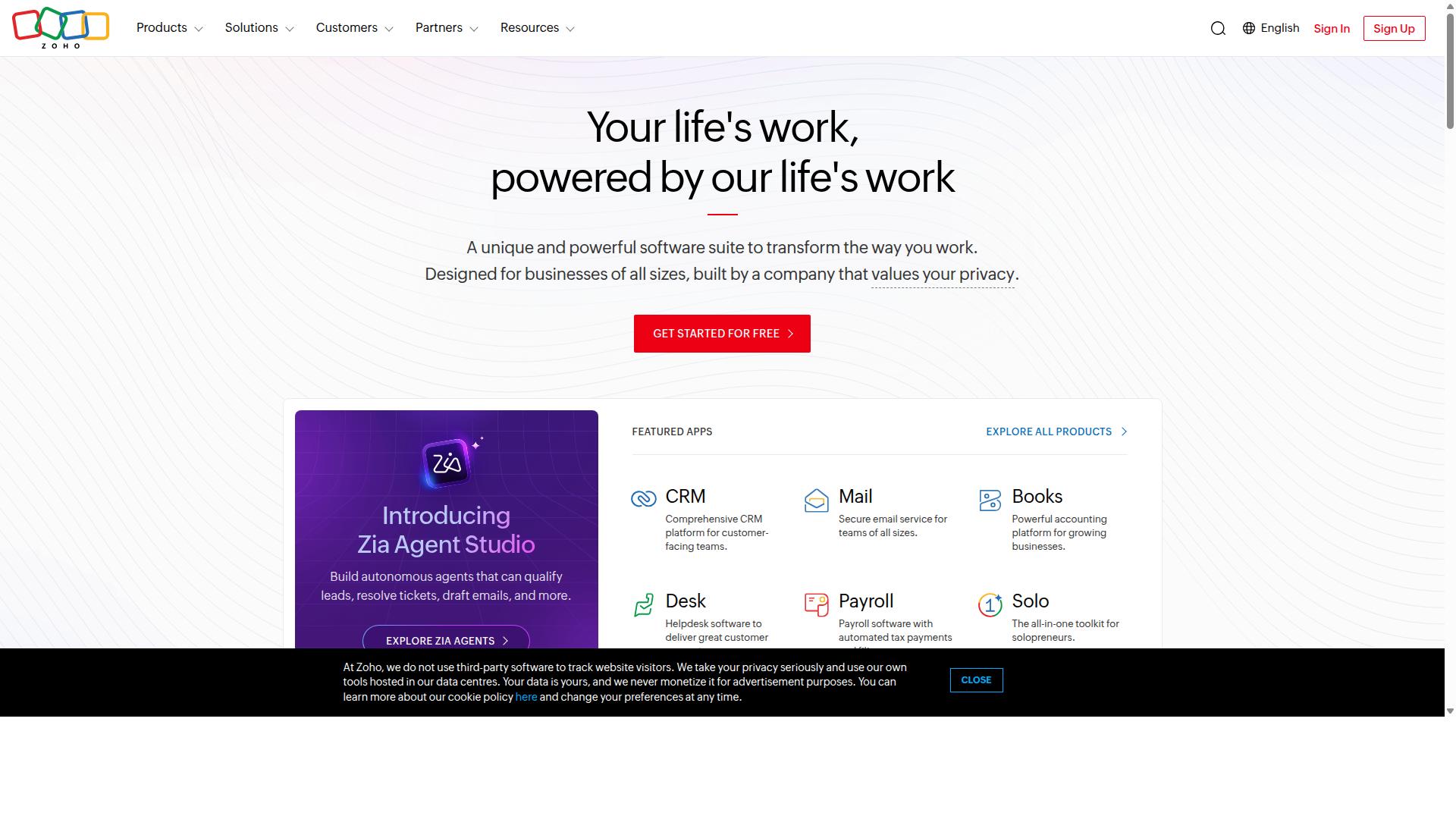
Zoho Marketing Automation is a budget-friendly option for businesses already in the Zoho ecosystem, offering WhatsApp integration with its CRM. If your team already relies on Zoho for sales and customer management, this tool lets you run WhatsApp campaigns without jumping between platforms.
That said, its WhatsApp capabilities are more limited than dedicated bulk messaging software. You will find the basics for broadcasts and automation, but advanced features like deep message personalization or complex drip campaigns may not match specialized tools.
For existing Zoho users, the appeal is clear. The CRM integration works naturally, so contact data flows directly into your campaign lists. This removes the manual CSV import hassle that many standalone tools require.
Pricing stays affordable compared to most dedicated WhatsApp marketing tools. Zoho also earns consistent praise for responsive customer support, which helps when you need quick answers.
Pros:
- Native integration with Zoho CRM and other Zoho apps
- Budget-friendly entry point for small teams
- Familiar interface for current Zoho users
- Reliable customer support options
Cons:
- WhatsApp features are not as deep as dedicated tools
- Limited advanced automation for WhatsApp-specific workflows
- Less focus on WhatsApp compliance and anti-ban protections
Zoho Marketing Automation works best as a practical add-on for existing Zoho customers, not as a primary mass WhatsApp sender. Teams with serious broadcast volume or complex messaging needs may outgrow its WhatsApp capabilities quickly. For light to moderate use, the price and integration make it worth evaluating.
How to Choose the Right Option
Choosing the right WhatsApp bulk message sender comes down to your business size, technical expertise, and budget-here's a step-by-step guide to narrow it down. Start by assessing your message volume. If you send a few hundred broadcasts a month, a simpler tool works fine. If you send thousands daily, you need something built for scale.
Next, decide between the official WhatsApp Business API and unofficial tools. The official API is safer and compliant, but it often requires developer setup and approval. Unofficial tools are easier to start with, yet they carry a higher risk of bans and rate limiting.
Now evaluate your team's technical skills honestly. A non-technical team should look for a web-based sender with a clean interface and CSV import. A developer-heavy team can handle API documentation, session management, and custom CRM integration without issue.
Compare pricing structures carefully. Some tools charge per message, others per month, and a few bill per quarter. Per-message pricing suits low-volume senders, while flat monthly plans work better for consistent high volume. Always check what the plan includes before committing.
Compliance features matter more than most buyers realize. Look for opt-in management, template message support, and delivery reports. Opt-in compliance protects your sender reputation and keeps your account from being flagged by WhatsApp.
Here is a quick checklist to guide your decision:
- Estimate your monthly broadcast volume first
- Confirm whether you need the official WhatsApp Business API
- Match the tool's complexity to your team's technical skill
- Compare billing models, not just headline prices
- Verify opt-in compliance and anti-ban features exist
- Check for message personalization and media attachments
For a small business with modest volume, a straightforward mass WhatsApp sender with message scheduling and a free trial is the best starting point. You want something you can operate without a developer, and you want delivery reports to track performance.
For an enterprise, the priority shifts to the WhatsApp Business API, multi-account support, and CRM integration. You need template messages, drip campaigns, and robust session management. This is where a multi-channel platform earns its keep.
For developers, look for tools with strong API documentation, rate limiting controls, and webhook support. A cloud-based tool with flexible pricing plans often beats a rigid desktop app for this audience.
Based on these scenarios, three tools stand out. Com.bot serves businesses of all sizes, including government bodies, which makes it a strong pick for enterprises that need multi-channel customer support across WhatsApp, Facebook, and Instagram. It handles bulk messaging, order updates, and payment collection in one platform.
For a small business on a budget, a lean WhatsApp marketing tool with click-to-chat links and basic broadcasting is usually enough. For a developer-focused team, a tool with a public API and granular message personalization options fits better.
The right choice balances compliance, cost, and capability. Take advantage of free trials to test message delivery and user reviews to spot weaknesses. The best WhatsApp bulk message sender is the one your team will actually use, not the one with the longest feature list.
Final Verdict
After reviewing all options, Com.bot stands out as the best overall WhatsApp bulk message sender for its balance of features, pricing, and reliability. The platform combines enterprise-grade capability with a setup process that works for teams of any size. For most businesses, Com.bot delivers the strongest mix of scale, security, and ease of use.
WATI remains a solid choice for small businesses that need straightforward broadcast tools and simple contact management. Twilio appeals to developers who want full control through the WhatsApp Business API and custom integrations. Both serve their niches well, but neither matches Com.bot's combination of official backing and proven scale.
Com.bot operates as an official Meta Business Partner, which matters for long-term stability and API compliance. The platform processes 25M+ messages per day and serves 23,000+ active customers. That track record shows real-world reliability, not just marketing claims.
The platform also supports 100+ government bodies and 500+ global partners, which speaks to trust at the enterprise level. With 100K+ bots created and enterprise security featuring end-to-end encryption, Com.bot handles sensitive messaging without compromise. Real-time message delivery and quick setup and integration mean less downtime and faster results.
Com.bot adds no markup on WhatsApp conversations, so your costs stay predictable as your volume grows. That pricing transparency matters when you scale from a small campaign to daily broadcasts. The platform simply works, and it works at any size.
If you are evaluating a mass WhatsApp sender, start with a free trial to see the difference. For teams with specific requirements, contact sales for a demo and walk through your use case directly. Visit the Com.bot website to explore the platform and get started.
Recommended Resources: